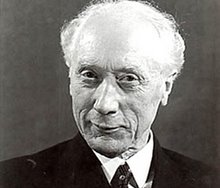
"I was dubious about the effects of the Alexander Technique when I first went in to experience it, but I found out almost immediately that the benefits were total - both physically and mentally - and, happily, have also been long-lasting."
(Joanne Woodward)


Die Kunst des Lockerlassens
Artikel lesen
Und ein weiterer Artikel über die Alexander-Technik.
Nadia Kevan ist seit 1993 Professorin für Bewegungslehre und Körperbewusstsein an der Folkwang-Hochschule für Musik und Darstellende Kunst in Essen. Die Alexander-Technik ist Bestandteil des Unterrichtsangebotes der Hochschule. Siehe auch: F.A.Z. vom 3.11.2007: Ein weiter Weg zum Applaus
Und ein weiterer Artikel über die Alexander-Technik.
Nadia Kevan ist seit 1993 Professorin für Bewegungslehre und Körperbewusstsein an der Folkwang-Hochschule für Musik und Darstellende Kunst in Essen. Die Alexander-Technik ist Bestandteil des Unterrichtsangebotes der Hochschule. Siehe auch: F.A.Z. vom 3.11.2007: Ein weiter Weg zum Applaus
What Feels Wrong
"... doing what feels wrong is paradoxically associated with a gradual improvement in the pupil´s general use and functioning."
(Alexander, F. M.: The Universal Constant in Living. New York 1941)
(Alexander, F. M.: The Universal Constant in Living. New York 1941)
Training
Aus einem Interview mit Prof. Dietmar Schmidtbleicher, Direktor des Instituts für Sportwissenschaften der Uni Frankfurt:
"... Durch Nichtstun oder Wenigtun reduziert sich die Muskelmasse sogar - ab dem 30. Lebensjahr pro Jahrzehnt um fünf bis zehn Prozent.
Das bedeutet, dass wir bis zum 80. Geburtstag im schlimmsten Fall die Hälfte unserer Muskeln verlieren können. Was hilft dagegen?
Das günstigste Anti-Aging-Programm ist Sport. Ein lebenslanges einmaliges Kraft- und ein einmaliges Ausdauertraining pro Woche versetzen Sie in einen Zustand, in dem Sie mit 65 Jahren noch auf 80 Prozent Ihrer Kraft- und Ausdauerleistung sind.
Nur einmal in der Woche soll reichen? Bringt mehr nicht auch mehr?
Eine Studie hat gezeigt: Wenn man einmal pro Woche trainiert, hat man nach acht Wochen 28 Prozent Zuwachs im Bereich der maximalen Kraft. Trainiert man zweimal, sind es 30 Prozent. Bei drei Trainingseinheiten sind es 30,4 Prozent. Und wenn Sie viermal wöchentlich trainieren, sind es nur noch 26 Prozent. Dann machen Sie mehr von den Proteinen kaputt, als Sie nachbilden können."
(Quelle: Reflex 24, Kieser-Training, Zürich 12/2007)
Ich gestatte mir in diesem Zusammenhang ergänzend darauf hinzuweisen, dass das tägliche Maß an moderater körperlicher Bewegung (Gehen etc.) zu Zeiten Alexanders noch deutlich über dem lag, was heute üblich (und statistisches Mittel) ist.
"... Durch Nichtstun oder Wenigtun reduziert sich die Muskelmasse sogar - ab dem 30. Lebensjahr pro Jahrzehnt um fünf bis zehn Prozent.
Das bedeutet, dass wir bis zum 80. Geburtstag im schlimmsten Fall die Hälfte unserer Muskeln verlieren können. Was hilft dagegen?
Das günstigste Anti-Aging-Programm ist Sport. Ein lebenslanges einmaliges Kraft- und ein einmaliges Ausdauertraining pro Woche versetzen Sie in einen Zustand, in dem Sie mit 65 Jahren noch auf 80 Prozent Ihrer Kraft- und Ausdauerleistung sind.
Nur einmal in der Woche soll reichen? Bringt mehr nicht auch mehr?
Eine Studie hat gezeigt: Wenn man einmal pro Woche trainiert, hat man nach acht Wochen 28 Prozent Zuwachs im Bereich der maximalen Kraft. Trainiert man zweimal, sind es 30 Prozent. Bei drei Trainingseinheiten sind es 30,4 Prozent. Und wenn Sie viermal wöchentlich trainieren, sind es nur noch 26 Prozent. Dann machen Sie mehr von den Proteinen kaputt, als Sie nachbilden können."
(Quelle: Reflex 24, Kieser-Training, Zürich 12/2007)
Ich gestatte mir in diesem Zusammenhang ergänzend darauf hinzuweisen, dass das tägliche Maß an moderater körperlicher Bewegung (Gehen etc.) zu Zeiten Alexanders noch deutlich über dem lag, was heute üblich (und statistisches Mittel) ist.
Unmögliches möglich
"Das Unmögliche möglich, das Mögliche angenehm und das Angenehme elegant machen."
(Moshé Feldenkrais)
Eine der bekanntesten und meistzitierten Aussagen Feldenkrais' über Ziele, die er mit seiner Methode zu erreichen sucht.
(Moshé Feldenkrais)
Eine der bekanntesten und meistzitierten Aussagen Feldenkrais' über Ziele, die er mit seiner Methode zu erreichen sucht.
Präsenz
"Präsent sein bedeutet, eine klare, objektive Umweltwahrnehmung zu haben und gleichzeitig die Lebensprozesse des eigenen Körpers wie Tonus, Zirkulation, Atmung zu spüren. Dies erfordert eine neutrale (angstfreie) Distanz, um die eigenen Reaktionen wach und vorurteilsfrei beobachten zu können."
(Kjellrup, Mariann: Eutonie - Bewusst mit dem Körper leben, München 2000)
(Kjellrup, Mariann: Eutonie - Bewusst mit dem Körper leben, München 2000)
A Story through the Feldenkrais Method
6 Minutes Video / Trailer
About this Video: "A story through the Feldenkrais method / The members of Group-13 is a documentary feature in which a historic meeting is taking place. Group-13 consists of the immediate disciples of Moshe Feldenkrais, who participated in his first course for trainers that took place between the years 1968-1971, and who have not congregated since. (...)
The film invites us to ponder upon the applications of the Method, on a personal and universal scale. The issues, which emerge, are relevant to all viewers - whether they have practiced Feldenkrais or not. (...)
Seven out of the thirteen original disciples participated in the Group-13 reunion: Ruth Alon, Shlomo Efrat, Devora Hisdai, Yochanan Ryverant, Chava Shelhav, Eli Vadler and Bruria Milo, who passed away during the making of this film - which is dedicated to her."
Sieben der dreizehn ersten Schüler Feldenkrais' in einem Dokumentationsfilm (Originallänge 48 Minuten) über die Methode.
About this Video: "A story through the Feldenkrais method / The members of Group-13 is a documentary feature in which a historic meeting is taking place. Group-13 consists of the immediate disciples of Moshe Feldenkrais, who participated in his first course for trainers that took place between the years 1968-1971, and who have not congregated since. (...)
The film invites us to ponder upon the applications of the Method, on a personal and universal scale. The issues, which emerge, are relevant to all viewers - whether they have practiced Feldenkrais or not. (...)
Seven out of the thirteen original disciples participated in the Group-13 reunion: Ruth Alon, Shlomo Efrat, Devora Hisdai, Yochanan Ryverant, Chava Shelhav, Eli Vadler and Bruria Milo, who passed away during the making of this film - which is dedicated to her."
Sieben der dreizehn ersten Schüler Feldenkrais' in einem Dokumentationsfilm (Originallänge 48 Minuten) über die Methode.
The World Congress in 1999
6 Minuten Video ansehen
Impressionen vom 6. Internationalen Kongress der Alexander-Technik in Freiburg im Jahre 1999. Director: Daniel Süsstrunk (Eröffnungsrede). Marjory Barlow und Erika Whittaker, beide Absolventinnen des ersten Ausbildungskurses 1931-1934, werden kurz vorgestellt.
Der 8. Internationale Kongress findet 2008 in Lugano statt.
Impressionen vom 6. Internationalen Kongress der Alexander-Technik in Freiburg im Jahre 1999. Director: Daniel Süsstrunk (Eröffnungsrede). Marjory Barlow und Erika Whittaker, beide Absolventinnen des ersten Ausbildungskurses 1931-1934, werden kurz vorgestellt.
Der 8. Internationale Kongress findet 2008 in Lugano statt.
The Alexander Technique and Meditation
read article
"Those who have engaged in meditation and have also been trained in the Alexander Technique will have seen that there is a close parallel. The Tibetan Lamas claim the capacity to continue meditation in all they are doing. When we have achieved the poise of Alexander's 'primary control', we can maintain it while giving consent to the limbs doing whatever we want. This has the closest relation to sustained meditation. Non-attachment to 'end-gaining' and control of reaction through 'inhibition' of immediate response to stimuli until directions for the primary control are given, is indeed a kind of western yoga. The act of refusing to respond to the primary desire to gain an end becomes the act of responding to the conscious reasoned desire to employ the means whereby the end may be gained. Clearly and obviously this touches everything we do. Here is the clue for breaking habit and lifting into the new. It would have wonderful effect if it could be included as an essential feature in teaching the 'inner game' of skiing, tennis and athletics. It is as basic to real therapy and healthy living as is nutrition through whole and organic food."
(Sir George Trevelyan: Prototypes of Holistic Achievement. About Rudolf Steiner and Matthias Alexander, Exploration into God, 1991)
Sir George Trevelyan war Teilnehmer des ersten Ausbildungskurses, den F. M. Alexander abhielt (1931-1934). Im Jahre 1982 erhielt er den alternativen Nobelpreis.
"Those who have engaged in meditation and have also been trained in the Alexander Technique will have seen that there is a close parallel. The Tibetan Lamas claim the capacity to continue meditation in all they are doing. When we have achieved the poise of Alexander's 'primary control', we can maintain it while giving consent to the limbs doing whatever we want. This has the closest relation to sustained meditation. Non-attachment to 'end-gaining' and control of reaction through 'inhibition' of immediate response to stimuli until directions for the primary control are given, is indeed a kind of western yoga. The act of refusing to respond to the primary desire to gain an end becomes the act of responding to the conscious reasoned desire to employ the means whereby the end may be gained. Clearly and obviously this touches everything we do. Here is the clue for breaking habit and lifting into the new. It would have wonderful effect if it could be included as an essential feature in teaching the 'inner game' of skiing, tennis and athletics. It is as basic to real therapy and healthy living as is nutrition through whole and organic food."
(Sir George Trevelyan: Prototypes of Holistic Achievement. About Rudolf Steiner and Matthias Alexander, Exploration into God, 1991)
Sir George Trevelyan war Teilnehmer des ersten Ausbildungskurses, den F. M. Alexander abhielt (1931-1934). Im Jahre 1982 erhielt er den alternativen Nobelpreis.
Abonnieren
Posts (Atom)